Parcel-level groundwater
due diligence for rural real estate.
Three steps
What's in it
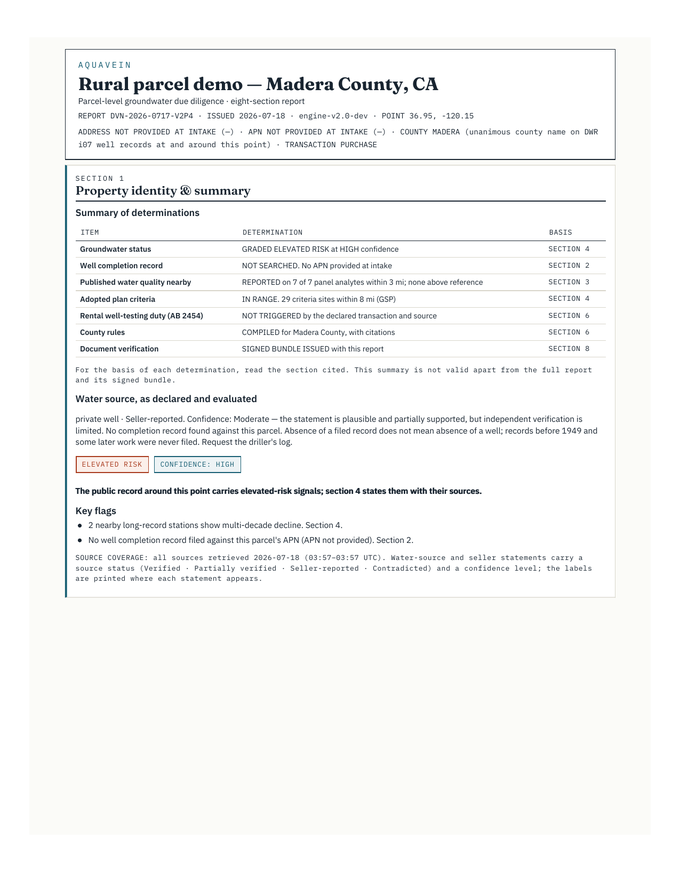
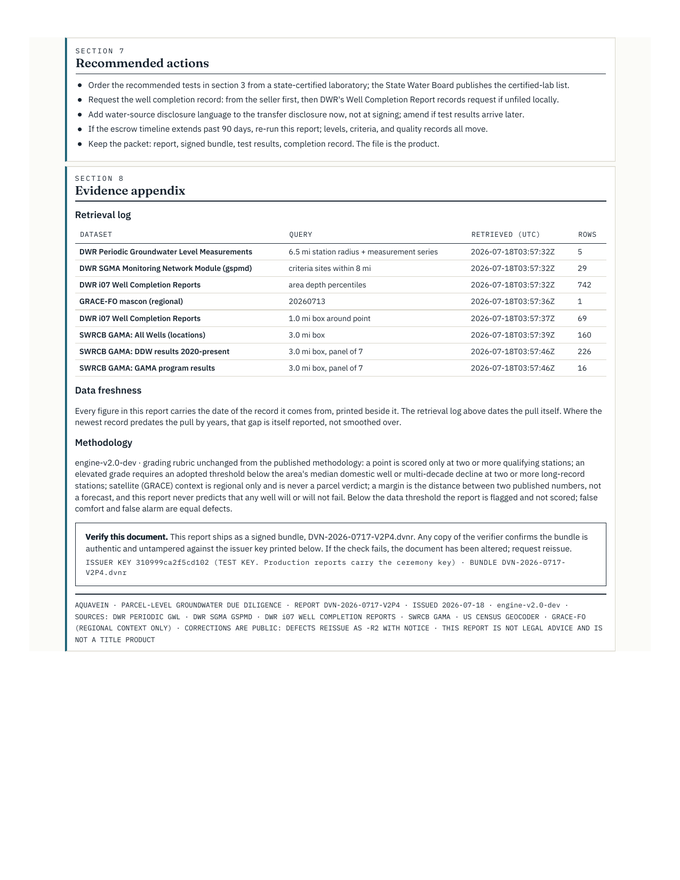
All eight sections → Read one we refused to score
Who it's for
Support the disclosure
The well's construction record, groundwater context, and any published basin thresholds or management data that apply, dated and sourced, so what you put in the file is documentation rather than recollection.
A contingency you can act on
An answer inside the inspection window, with the tests worth ordering and the records worth requesting listed as a checklist.
One consistent file
The same packet on every rural transaction the office touches, so the standard doesn't depend on which agent caught the listing.
A dated record that travels
Signed, versioned, and re-sendable years later. It stays with the file through resale.
Sourced context, fast
Groundwater records and basin context with a citation on every line, without a consultant's timeline.
Rural collateral review
Parcel-level groundwater context across a portfolio, with dates and sources on every line.
Why not just ask the seller?
Sellers may not know
Most well owners never saw the completion report. Depth and construction date are frequently unknown to the person who has drunk the water for twenty years.
Recollection is not documentation
"It's never gone dry" is a memory. Eighteen months after closing, a memory is not what anyone asks for.
Public records corroborate, or contradict
Where the record supports the disclosure, you can say so with a citation. Where it conflicts, you'd rather know before closing than after.
It documents the file
The point isn't to catch anyone out. It's that professionals need a paper trail, and a dated sourced packet is one.